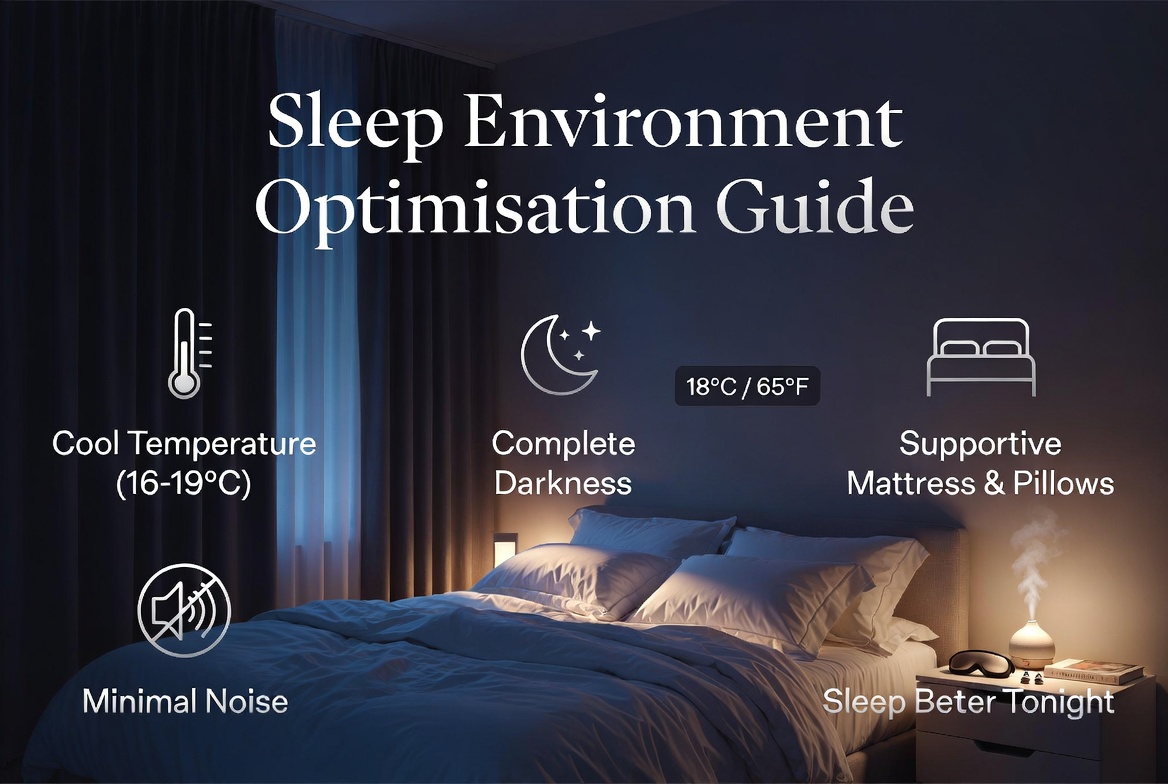
Sleep Environment Optimisation Guide: How to Create the Perfect Bedroom for Better Sleep
BySmart Shopping HQ
A complete sleep environment optimisation guide showing how to improve bedroom setup, routines, and habits for deeper, more consistent sleep.
Sleep Environment Optimisation Guide: The Foundation of Better Sleep
A sleep environment optimisation guide is about improving every factor in your bedroom that influences how quickly you fall asleep and how well you stay asleep.
Sleep is not controlled by a single habit. It is the result of how your environment, routine, behaviour, and lifestyle interact together.
This page acts as the central guide for building a complete sleep optimisation system.
Sleep Is a System, Not a Single Fix
Most sleep issues are not caused by one problem, but by multiple small disruptions working together.
Sleep quality is influenced by four core systems:
Environment (light, temperature, noise, comfort)
Routine (sleep and wake timing)
Behaviour (evening habits and stimulation)
Lifestyle (stress, diet, activity, recovery)
Improving sleep means addressing all of these areas together rather than focusing on one change.
Light: The Strongest Sleep Signal
Light is the most powerful factor affecting your circadian rhythm.
Exposure to bright or artificial light at night can delay sleep, while darkness helps the body naturally prepare for rest.
Use blackout curtains where possible
Reduce screen use before bed
Use warm, low lighting in the evening
Avoid overhead bright lights at night
Small changes in light exposure often create fast improvements in sleep quality.
Temperature and Physical Comfort
Your body naturally lowers its temperature during sleep, so a cooler environment supports deeper rest.
Keep the bedroom cool and consistent
Use breathable bedding materials
Avoid overheating with heavy fabrics
Ensure airflow or ventilation
Temperature stability is more important than exact numbers.
Bedding and Sleep Surface Quality
Your bedding directly affects comfort, skin temperature, and movement during the night.
Better materials reduce micro-disruptions that can fragment sleep.
Organic cotton for breathability
Linen for cooling and airflow
Bamboo for moisture control
Layered bedding for seasonal adjustment
Comfortable bedding helps maintain consistent sleep throughout the night.
Noise and Environmental Disruption
Even low-level noise can impact sleep depth and recovery quality.
Use white noise or consistent sound
Minimise unpredictable noise sources
Use earplugs if needed
Choose a quieter room location if possible
A stable sound environment helps reduce micro-awakenings.
Sleep Routine and Circadian Rhythm
Your sleep routine reinforces your body’s internal clock.
Consistency is the key factor in stabilising sleep timing.
Go to bed and wake up at the same time daily
Get morning natural light exposure
Avoid caffeine late in the day
Create a consistent wind-down routine
Routine and environment work together to regulate sleep patterns.
Evening Behaviour and Wind-Down Process
What you do before bed directly affects how easily you fall asleep.
Reduce screen exposure 1 hour before bed
Lower stimulation in the evening
Engage in calming activities
Avoid stressful tasks at night
A consistent wind-down routine signals to your brain that sleep is approaching.
Lifestyle Factors That Influence Sleep
Sleep quality is also affected by daily habits and stress levels.
Stress and mental load
Physical activity levels
Diet and meal timing
Daytime light exposure
These factors influence how easily your body transitions into rest at night.
Common Sleep Mistakes
Many sleep problems come from small, repeated habits rather than major issues.
Using screens in bed
Irregular sleep schedule
Overheating at night
Cluttered or overstimulating bedroom
Late-night caffeine or stimulation
Fixing these small issues often leads to noticeable improvements quickly.
How to Start Optimising Sleep
If you are just starting, focus on simple foundational changes first.
Fix your wake-up time
Improve bedroom lighting
Add a basic wind-down routine
Reduce late stimulation
Once these are stable, deeper optimisation becomes easier.
Is Sleep Environment Optimisation Worth It?
Improving your sleep environment is one of the highest-impact changes you can make for sleep quality.
Unlike habits that require daily effort, environmental improvements work continuously in the background once set up correctly.
Frequently Asked Questions
What is sleep environment optimisation?
It is the process of improving your bedroom and surroundings to support better sleep quality and consistency.
What is the most important sleep factor?
Light and temperature are two of the strongest environmental influences on sleep quality.
How quickly can sleep improve?
Some improvements can happen within days, but stable changes usually take a few weeks.
Does bedding really matter?
Yes. Comfort and breathability directly affect sleep continuity.
Is sleep optimisation worth it?
Yes. Even small improvements in sleep quality can significantly affect energy and focus.